
Ghee, in Dutch often clarified butter named and internationally known as clarified butter, has something irresistible about it. It tastes round and creamy, bakes quietly and gives dishes a warm glow. But does ghee fit if you want to avoid milk or digest lactose less well? Here is a clear explanation, including an honest comparison with vegetable cooking fats and practical testing tips.
What exactly is ghee
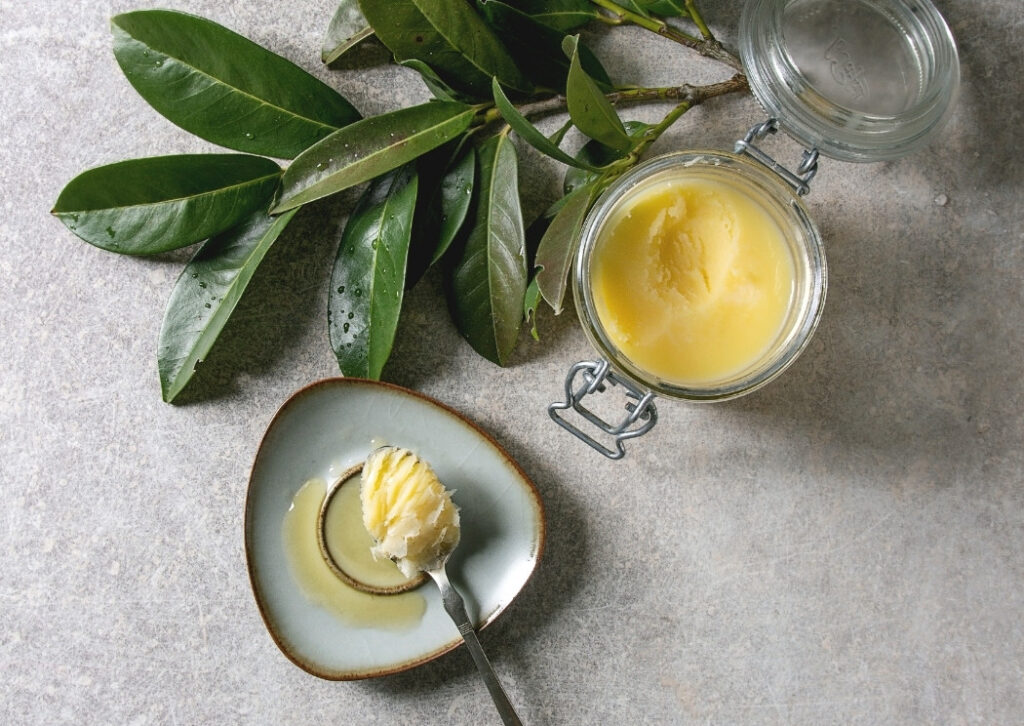
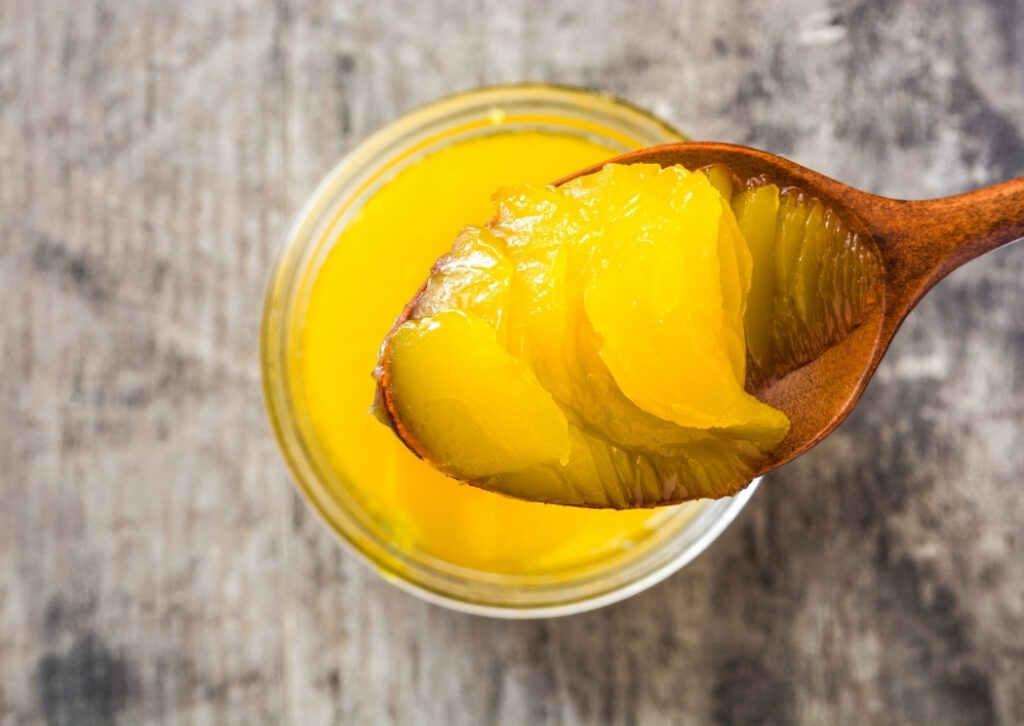
Ghee starts out like regular butter. When clarifying, you gently heat the butter. The water evaporates and the milk proteins collect as foam on top and as sediment at the bottom. The golden yellow fat that remains is called ghee. Because it consists almost entirely of fat, it behaves stably in the pan and splatters less than cream butter.
Because lactose and milk proteins are mainly in the water and protein fraction, you remove much of it during the clarification process. This is why many people with lactose intolerance tolerate ghee better than butter. Important to know: removing a large portion does not automatically mean zero. Depending on the process, traces may remain.

Notice: This blog is informational and not medical advice. If you have severe or persistent symptoms or concerns, contact your doctor. If in doubt, consult with your doctor or dietitian.
Lactose and milk protein are not the same thing
What is lactose
Lactose is milk sugar. Your body has the enzyme lactase needed to digest lactose. If there is too little lactase active, gas and feeling heavy may occur. More background: what does lactase.
What are milk proteins
Milk proteins include casein and whey. Sensitivity to these requires a different approach than lactose. The difference is briefly explained in: lactose intolerance vs. cow's milk intolerance.
Is ghee lactose-free
In practice, ghee usually contains very little lactose and hardly any milk protein. Many people with lactose intolerance therefore tolerate ghee better than cream butter. It is rarely 100 percent zero. Start with small amounts and see how your body reacts.
With a cow's milk protein allergy, you want to avoid trace amounts. Then ghee is generally not a safe choice. Consult with your doctor or dietician and prefer to choose fats without milk components.
Who can ghee work for
If you suspect lactose is a factor, ghee can be a fine way to bake or roast with a buttery taste. Your own threshold is personal. Where one person uses a tablespoon without a problem, another notices something at just a teaspoon. Briefly write down what you eat and how you feel and make adjustments.
If you suspect a protein reaction rather than a lactose issue, prefer to choose fats without milk ingredients. Consider olive oil, mild rapeseed oil or a vegetable margarine that is explicitly milk-free.
How to safely test whether ghee works for you
Plan a week in which you replace cream butter with ghee at one set cooking time. Start with a teaspoonful. Observe your symptoms that day and note briefly what you notice. If it goes well, test one tablespoon. If you notice restlessness, step back or choose an alternative fat.
Ghee compared with vegetable cooking fats
Your choice depends on taste, ease of use and what your body likes. Here are the main differences in plain language.
Ghee vs. olive oil
Taste and use: ghee gives a creamy, slightly nutty tone. Olive oil ranges from fresh to full-bodied. For high temperatures, ghee is practical; for low and medium temperatures, a mild olive oil does an excellent job. Olive oil is naturally free of milk solids.
Ghee vs. canola oil
Taste and use: rapeseed oil is neutral and therefore versatile. It bakes evenly and lets other flavors speak beautifully. It is plant-based and dairy-free. If you want especially buttery flavors, ghee scores higher. If you want neutral baking without milk ingredients, rapeseed oil is a safe all-rounder.
Ghee vs. coconut oil
Taste and use: coconut oil has a recognizable profile. It goes well with curry or sweet baked goods, but not everyone wants that tone everywhere. Coconut oil is dairy-free. Ghee gives a more classic buttery touch. In terms of heat resistance, both do well. Choose what best suits your dish, and see how your body reacts.
Ghee vs. dairy-free vegetable margarine
Taste and use: good vegetable margarines fry predictably and are often fortified with vitamins. Always check the label for milk ingredients and trace claims. If you miss a buttery taste but want to remain completely dairy-free, a suitable margarine may be a practical alternative. Ghee is animal fat and by itself has that buttery feel. The choice turns on taste, label requirements and personal tolerance.
Summary: ghee excels in butter flavor and high baking temperatures. Vegetable fats are standard dairy-free and give you more security if you want to avoid protein. For each dish, test what you find most comfortable and tolerable.
What's on the label
On jars of ghee you will read terms like ghee, clarified butter or clarified butter. Sometimes you'll see lactose-free or free of milk protein. The latter is a hefty claim. Many brands therefore choose formulations such as contains traces of milk or very low in lactose. If you want to reduce risk, choose a brand that explains how it is clarified and filtered. When in doubt, check the website or customer service. Helpful in-depth: ingredient list on milk ingredients.

Ghee in the kitchen
Ghee is creamy as soon as it gets hot and browns beautifully without burning quickly. Ideal for roasting vegetables, eggs, pancakes and light sauces. You can make your own ghee: melt butter over low heat, remove foam, and pour the clear fat through a fine sieve or cheesecloth into a clean pot. Let cool and store dark and dry. If you have any risk of spores to avoid, choose a product that is clear about this rather than clarifying yourself.
Is ghee lactose-free?
Ghee usually contains very little lactose and hardly any milk protein, as these are largely removed during the clarification process. For many people with lactose intolerance, ghee works well. It is rarely completely zero, so build up slowly.
Can I use ghee with cow's milk protein allergy?
With a cow's milk protein allergy, you want to avoid trace amounts. Because ghee can contain traces, it is usually not a safe choice. Choose a fat without milk solids and consult with your doctor or dietitian.
How do I test whether ghee suits me?
For a week, replace one regular butter moment with ghee. Start with a teaspoon and observe your reaction. If it goes well, build up to a tablespoon. Briefly note what you notice and make adjustments.
Is ghee the same as clarified butter?
In everyday use, yes. Both refer to butter from which water and proteins have been removed. Sometimes longer heating gives ghee a deeper, nutty flavor. For most home situations, they are interchangeable.
Is ghee vegan?
No. Ghee comes from cow's milk. Those who eat entirely plant-based foods or want to avoid milk solids are better off choosing vegetable oils or margarines without milk solids.

 Nederlands
  English
  Español
  Deutsch
  Français
  Italiano
Your reading tip for now
Blog Lactose
Right lower abdominal pain and lactose intolerance: recognizing and what helps
Right lower abdominal pain and doubts about lactose intolerance? Here's how to recognize patterns, test carefully with...
May
Blog Lactose
How do I know if I'm lactose intolerant? (3)
Are you unsure whether you have lactose intolerance? Learn how to recognize the symptoms, do a short-term elimination and reintroduction test, and when to see your doctor or...
Jun
Blog Cow's Milk
Can you eat mozzarella if you're intolerant to cow's milk? Here's how to choose the right one
Mozzarella bij koemelk-intolerantie: uitleg over lactose, melkeiwit, etiketten lezen en praktische alternatieven voor thuis en...
Jul
Blog Cow's Milk
What is the difference between cow's milk allergy and cow's milk intolerance?
And why it's important to know the difference Avoiding cow's milk is one thing....
Jul
Cow milk-free recipes Lactose-free recipes Recipes
Chicken Curry with Rice and Apple
Milde kip kerrie met kokosmelk, rijst en appel. Romig, kruidig en makkelijk koemelkvrij te maken.
Jul
Blog Cow's Milk
Cow's Milk Intolerance and Your Social Circle: Keep It Simple and Enjoyable
Birthday party with a cow's milk intolerance? With simple cow's milk-free options, checking labels, and clear guidelines, it stays relaxed and...
Jul